Diligencing Physical AI
A technical checklist for allocators who cannot evaluate the science themselves — what to ask, what a good answer sounds like, and the three claims that are almost always overstated.
Product strategy, market access, and capital strategy for founders who have already done the hard part — and independent technical judgment for the capital behind them.
Most deep-tech companies are funded on the strength of the thing that is already finished. The science works. That is why the round closed.
What comes next is a different discipline entirely — deciding what to build and for whom, getting into a market that has never bought this before, and financing the years between the first customer and the hundredth. Very few founders have done it. Very few advisors have either.
Behind the practice is an operator who has taken products from Series A to nine figures of revenue, led the acquisitions that filled the gaps his teams could not build, and now sits on the investment side of the table for fifty companies attempting the same crossing.
Fig. 01 — The three ingredients a scientific founder needs and rarely has
What to build, for whom, priced and packaged how.
First customers, channels, partners, procurement.
How much, when, from whom, structured how.
Every engagement is advisory. Fees are retainers, project fees, or advisory equity — never contingent on a transaction closing.
What to build and for whom. Roadmap and portfolio decisions, positioning, pricing and packaging, security and compliance posture, first-customer strategy, channel and partner design, and the commercial hiring that has to follow.
Operating advisory →Independent assessment of opportunities already on your desk — is the technology real, is this team the one to commercialize it, what has to be true for it to scale. Plus sector research, thesis development, and a confidential digital-risk programme for principals and their families.
Diligence, thesis & privacy →Landscape mapping, build-buy-partner assessment, target screening against a strategic thesis, and technical diligence support through an acquisition. We have led $300M+ in acquisitions and been on the other side of a $1.6B one.
Scouting & M&A →Joint technical assessment on rounds where the science is the risk, and reciprocal perspective-sharing with funds working the same sectors.
Co-diligence →Six sectors, chosen because they share a constraint: the science is ahead of the commercial path, and the winners are decided by execution rather than discovery.
Embodied intelligence, perception, autonomy, and the manufacturing reality of putting models into moving hardware.
Semiconductors, edge and secure compute, novel architectures, and the frontier hardware the AI buildout actually runs on.
Computational biology, drug discovery platforms, brain–computer interfaces, and diagnostics where the bottleneck is engineering, not biology.
Dual-use systems, autonomy, resilient communications, and the procurement path that decides whether good technology ever fields.
Power, cooling, interconnect, and the physical and energy constraints that now set the ceiling on compute.
Security for AI systems, enterprise data protection, and the certification regimes that gate every regulated market on this list.
Founded, scaled, sold, acquired — and now funding the companies doing it next.
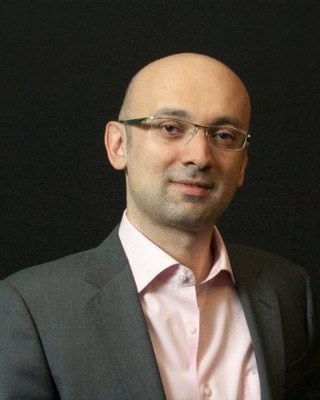
A product executive by background, I have delivered more than $1B in hardware and software products — AI security and test technologies used by over 100,000 enterprises and millions of users worldwide. Two decades as a founder and operator, and now a Managing Partner at SmartGateVC, where I lead deep-tech, physical AI, life sciences, neurotech, and cybersecurity investments.
NextScale is where I do that work independently: directly with founders, and with the family offices, strategics, and funds that back them.
One piece a month.
Why deep-tech companies die between a working prototype and production volume — and the four operating decisions that determine which side they land on.
A technical checklist for allocators who cannot evaluate the science themselves — what to ask, what a good answer sounds like, and the three claims that are almost always overstated.
What I learned about portfolio strategy from the inside of an acquisition — and what I would do differently.
Tell us what you are building, or what you are trying to underwrite. We read everything that comes in and reply to most of it. If it is not a fit, we will usually say so in the first exchange rather than the third.